
Click here for text in English –>
Keräilytavaran myynnissä ja ostossa vaikuttavat lait ovat sinänsä varsin yksinkertaisia. On kyse kysynnästä ja tarjonnasta. Jos kysyntä ylittää tarjonnan, kohteen hinta tuppaa nousemaan. Matemaattisesti tämä voidaan esittää:
Kysyntä > tarjonta –> hinta nousee
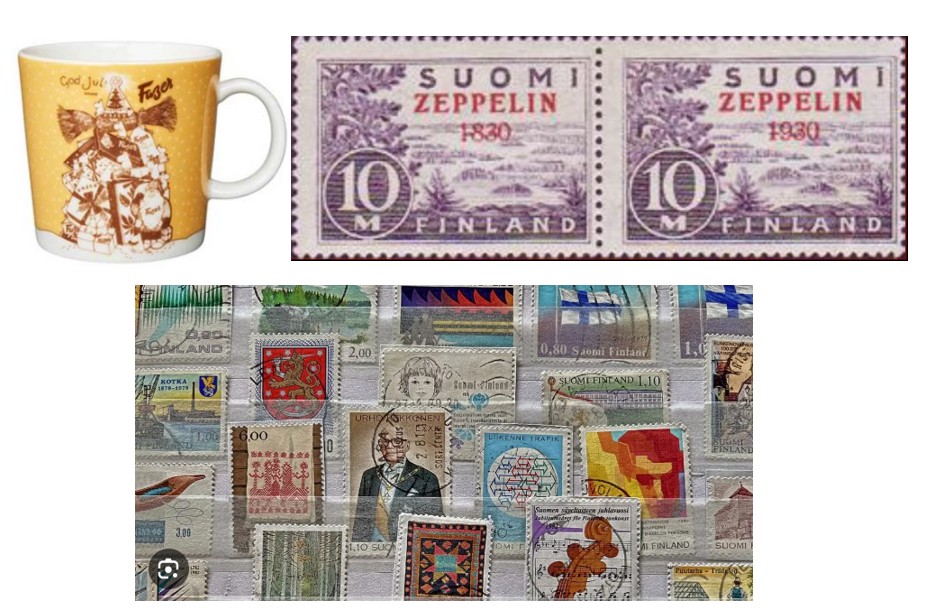
Tästä hyvä esimerkki on vaikkapa ns. Fazer-muumimuki, josta on maksettu yli 10000 euroa huutokaupoissa, eli
Kysyntä >> tarjonta –> hinta nousee voimakkaasti
Sitten jos ajatellaan tilannetta, jossa tarjonta ylittää kysynnän, voidaan ottaa esimerkki viime vuosituhannen lopun tyypillisistä ns. koululais-postimerkkikokoelmista, eli
Kysyntä << tarjonta –> hinnat laskevat
Tämä johtuu siitä, 40-50 vuotta sitten lähes joka koululainen ja iäkkäämmätkin harrastivat postimerkkeilyä. Samoin ko. kokoelmat ovat säilyneet hyvin komeroissa ja häkkivarastoissa ja lisäksi, maailman muutoksen takia, keräilijöiden lukumäärä on romahtanut viime vuosikymmeninä. Tästä on artikkeli erikseen (linkki). Filatelian kauppias puhui tästä ”rakennemuutoksena”.
Sama ilmiö huomataan filateliaa myyvissä huutokaupoissa, eli ns. bulkkitavaran arvo on laskenut ja laskee edelleen. Myynnissä on ehkä yksittäisen keräilijän kokonaisia elämäntöitä yhdellä lyönnillä, kokoelmat muutamaan pahvilaatikkoon pakattuna. Perikunta laittaa huutokauppaan, kun haluaa ne realisoida, ei jatkaa keräilyä.
Onko filatelia sijoitus?
Seuraava matematiikka voi loukata jotakuta, mutta kun on isoistakin rahoista kyse, ei aina kannata olla turhan kohtelias.
Päästään mielenkiintoiseen kysymykseen, kun väitetään, että filatelia voi olla sijoitus. Huutokaupasta raportoidaan, että filateeliset harvinaisuudet tekevät hyvin kauppansa edelleen. Esimerkiksi vuoden 1930 Zeppelin-merkin virhemerkki (painama 1830, katso otsikkokuva) myy aina hyvin, koska
Kysyntä >> tarjonta –> hinta noussut
Zeppelin-virhemerkkejä ei tule lisää markkinoille mutta se on niin erikoisen, helposti tunnistettava, että kiinnostusta riittää. Eri asia on vaikkapa hammaste- ja vesileimaerojen suhteen, jotka vaativat perehtymistä.
Jos ajattelee tekevänsä sijoituksia ostamalla filateelisia harvinaisuuksia, kannattaisi huomioida, että
– kalliisiin kohteisiin sijoittaminen edellyttää varallisuutta, siis myös sietokykyä hävitä sijoituksensa
– varallisuus yleensä kertyy vanhempiin ikäluokkiin. On arvioitu, että nykyiset seniorit jäisivät kaikista varakkaimmiksi ikäluokiksi
– iso osa filateliaan perehtyneistä varakkaista on suuriin ikäluokkiin kuuluvia. Koronapandemian alkaessa v. 2020 heitä oli merkittävästi ns. riskiryhmässä. Nyt he ovat siis vähintään 75-vuotiaita. Heidän tilastollinen elinajanodotteensa on noin 80 vuotta.
– tulee toki nuorempia harrastajia jonkin verran, mutta ainakin filatelian yhdistyksissä (joissa varakkaita ns. huippukeräilijöitä on mukana), jäsenmäärät laskevat koko ajan.
– uusien nuorempien harrastajien mahdollisuus sijoittaa kalliisiin kohteisiin voi olla vähäisempi
– suomalaisille arvokkaille kohteille voi olla kysyntää kansainvälisestikin, mutta pienenä suht. syrjäisenä kulttuuri- ja kielialueena muun maailman arvofilatelian kohteet voivat viedä kv. huomion
Edelllisten seikkojen pohjalta rajaan tarkasteltavaan populaatioon ”suomalaiset varakkaat huippufilateliaan sijoittajat”
Epävarmuuskerroin nimeltä luonnollinen poistuma
Vanha sanonta kuuluu, että vain muutos on pysyvää. Olen huomannut, että konservatiivisuus on filatelisteille tyypillistä, muutoksia entiseen kokoonnutaan kiukuttelemaan yhdessä, entistä haikaillen. Nyt voidaan asettaa kerroin ”luonnollinen poistuma”, tarkoittaa siis ”suomalaisten varakkaiden huippufilatelistien kuolleisuutta ajan kuluessa”. Merkitään sitä symbolilla ”LP(t)”. Suluissa oleva t eli aika voi vaikuttaa LP:n arvoon, väitän että merkittävästi alentavasti nimenomaan seuraavan 5 – 10 vuoden aikana.
Tavallisesti edesmenneen kokoelmat tulevat markkinoille realisoitavaksi, siirtyvät jäljelle jääville filatelisteille. Kaava muuttuu nyt siis seuraavasti:
Kysyntä*LP(t) << tarjonta * 1/LP(t)
Täten luonnollinen poistuma LP(t) on iso tekijä, koska se vaikuttaa kahta kautta, laskien kysyntää ja käänteisesti nostaen tarjontaa.
Lauseke voidaan esimerkiksi kertoa puolittain ja saadaan:
Kysyntä*LP(t)^2 << tarjonta
Täten luonnollinen poistuma (LP(t)) vaikuttaa toiseen potenssiin. Kohteiden hinnat tunnetusti laskevat kun tarjonta kasvaa ja kysyntä laskee.
Edelleen, koska luonnollinen poistuma vaikuttaa kysynnän ja tarjonnan lakiin toiseen potenssiin ja sen arvo voi laskea seuraavan 5 – 10 vuoden aikana, se todennäköisesti tekee tilanteen erittäin muuttuvaiseksi.
Polarisaatio
Ko. matematiikassa olen olettanut, että kulloinkin jäljellä olevien huippukeräilijöiden käytös pysyy samana. Se voi olla epävarmuustekijä lisää, nimeltä polarisaatio: kun nähdään, että jonkin kohteen arvot lähtevät tippumaan, suunnataan sijoittamista muualle. Tuskin kukaan jatkaa sijoittamista vain siksi, että estäisi jonkin kohteen arvojen tippumisen. Keräilijöiden käytös voi siis osaltaan jyrkentää toisen kohteen laskua tai nostaa toisen kasvua.
Polarisaatio voi myös kaventaa huippukohteiden kategoriaa. Esimerkiksi vaikkapa kiinnostus kuvakevirheisiin tai tiettyihin paikallishistoriallisiin kokoelmiin voi hiipua. Tästä tuore todiste on myyjän nimeltä ”Sarpaneva” Philabid-alustalla pitämä huutokauppa Ahvenanmaan filateliaharvinaisuuksia vuonna 2024. Oli muutama sata kuvakevirheitä, Itämeren risteilyalusten erikoisleimakohteita tms. jotka sinänsä varmasti ovat harvinaisuuksia. Kauppa avattiin ja suljettiin monta kertaa viime vuonna, myyntiaikaa pidennettiin. Mutta huutoja en nähnyt mistään kohteesta. ”Ahvenanmaa putoaa kuin kivi”- totesi eräs tuntemani edesmenneitten filateelisen materiaalin realisoija. Entä, jos vastaaville suomalaisille kohteille käy joskus näin?
Yksi näkökulma, joka voi Suomessakin ruveta vaikuttamaan, ovat ns. trofeemetsästäjät. He eivät ole oikeastaan filatelisteja, vaan muuten rikastuneita, jotka haluavat metsästää itselleen sen kaikista harvinaisimman kohteen. Näistä ”superrikkaista” (”Venäjän oligarkit, kiinalaiset miljonäärit & Piilaakso-yritysten toimitusjohtajat”) puhuu myös artikkeli ”The long, Slow death of Stamp Collecting” (linkki), kun he hankkivat maailman harvinaisimpia kohteita, miljoonaluokassa.
Lopuksi
Väitteeni ei siis ole, että suomalaisen arvofilatelian kohteiden arvot romahtavat. Väitän, että on harha olettaa, että kysynnän vs. tarjonnan tilanne tai trendi pysyy nykyisenkaltaisena. Filatelisti saattaa ajatella, että ”tämä toimii näin niin kauan kuin minä elän”, psykologisista syistä. Huutokaupan pitäjä saattaa todeta, että filatelian harvinaisuuksien markkina on hyvä ja senkun paranee, markkinointipsykologisista syistä. Mutta toisaalta samalla laajentaa tarjontaansa muihin keräilykohteisiin kuin filateliaan, ennakoiden muutoksen. Sijoittamista ajatellen, polarisaatio eli ero halvan ja kalliin välillä syvennee entisestään.
Supply, Demand and Natural Decline
The laws that affect the sale and purchase of collectibles are quite simple in themselves. It is a matter of supply and demand. If demand exceeds supply, the price of the item tends to rise. Mathematically, this can be expressed as:
Demand > supply –> price rises
A good example of this is the so-called Fazer Moomin mug, for which over 10,000 euros have been paid at auctions, i.e.
Demand >> supply –> price rises sharply
Then, if we consider a situation where supply exceeds demand, we can take the example of the typical so-called schoolchild stamp collections of the end of the last millennium, i.e.
Demand << supply –> prices fall
This is because 40-50 years ago, almost every schoolchild and even the elderly were fond of stamp collecting. Similarly, the collections in question have been well preserved in closets and cage storages and, in addition, due to the change in the world, the number of collectors has collapsed in recent decades. A philatelic dealer spoke of this as a “structural change”.
The same phenomenon is observed in Finnish auctions selling philately, i.e. the value of so-called bulk goods has decreased and is still decreasing. The sale may include the entire life work of an individual collector in one auction, collections packed into a few cardboard boxes. An inheritance puts them up for auction when it wants to realize them, not continue collecting.
Is philately an investment?
The following mathematics may offend someone, but when it comes to big money, it is not always worth being too polite.
I get to an interesting question when it is claimed that philately can be an investment. It is reported from a Finnish auction house that philatelic rarities are still doing well. For example, the 1930 Zeppelin stamp error stamp (printed in 1830, see the title image) always sells well because
Demand >> supply –> price has increased
No more Zeppelin error stamps are added to the market, but they are so special and easily recognizable that there is enough interest. It is a different matter, for example, with the differences in perforations and watermarks, which require familiarization.
If you are thinking of making investments by buying philatelic rarities, it is worth considering that
– investing in expensive items requires wealth, and therefore also the ability to withstand losing your investment
– wealth usually accumulates in older age groups. It has been estimated that today’s seniors would remain the wealthiest age group of all
– a large part of the wealthy who have become familiar with philately belong to the older age groups. When the corona pandemic began in 2020, there were a significant number of them in the so-called risk group. Now they are at least 75 years old. Their statistical life expectancy is about 80 years.
– of course there will be some younger enthusiasts, but at least in philatelic associations (which include wealthy so-called top collectors), the number of members is constantly decreasing.
– the opportunity for new younger enthusiasts to invest in expensive items may be less
– there may be a demand for Finnish valuable items internationally, but as a small, relatively remote cultural and linguistic area, valuable philatelic items from other parts of the world can attract international attention
Based on the above, the population under consideration is limited to “Finnish wealthy top philatelic investors”
An uncertainty factor called natural decline
The old saying goes that only change is permanent. I have noticed that conservatism is typical of philatelists, they gather together to moan about changes to the past, longing for the past. Now we can set the factor “natural decline”, which means “the mortality rate of wealthy Finnish top philatelists over time”. Let’s denote it with the symbol “ND(t)”. The t in brackets, i.e. time, can affect the value of ND, I argue that it will significantly decrease specifically over the next 5 – 10 years.
Usually, the collections of the deceased come to the market to be realized, transferred to the remaining philatelists. The formula now changes as follows:
Demand*ND(t) << supply * 1/ND(t)
Thus, the natural obsolescence ND(t) is a big factor, because it affects two ways, decreasing demand and conversely increasing supply.
For example, the expression can be multiplied side by side and we get:
Demand*ND(t)^2 << supply
Thus, the natural decline (ND(t)) affects in second power. The prices of items are known to decrease when supply increases and demand decreases.
Furthermore, because the natural decline affects the law of supply and demand to the second power and its value can decrease over the next 5 – 10 years, it is likely to make the situation very volatile.
Polarization
In the mathematics above, I have assumed that the behavior of the remaining top collectors at any given time will remain the same. This can be an additional uncertainty factor, called polarization: when we see that the values of one object are starting to fall, we direct our investments elsewhere. It is unlikely that anyone will continue investing just to prevent the values of one object from falling. The behavior of collectors can therefore contribute to the sharp decline of one object or the rise of another. growth.
Polarization can also narrow the category of top collectible items. For example, interest in image errors in stamps or certain local history collections may fade. Recent evidence of this is the auction of Åland philatelic rarities in 2024 held by a seller named ”Sarpaneva” on the Philabid website. There were a few hundred stamp image errors, special cancellation items from Baltic cruise ships, etc., which in themselves are certainly rarities. The sale was opened and closed many times, as well as the sale period extended. But I did not see any bids for any item. ”Åland is sinking like a stone” – said a realizer of deceased philatelic material I know. What if this will happen to similar Finnish collecting items?
One perspective that may also start to have an impact in Finland are the so-called trophy hunters. They are not really philatelists, but otherwise enriched people who want to hunt for the rarest item for themselves. The article ”The long, Slow death of Stamp Collecting” (link) also talks about these ”super rich” (”Russian oligarchs, Chinese millionaires & Silicon Valley CEOs”), when they acquire the world’s rarest items, in the million-dollar range.
Finally
My argument is not that the values of Finnish valuable philatelic items will collapse. I argue that it is a mistake to assume that the situation or trend of demand vs. supply will remain as it is today. A senior philatelist may think, “This will work like this as long as I live,” for psychological reasons. An auctioneer may state that the market for philatelic rarities is good and will improve, also for marketing psychological reasons. But at the same time, they may expand their offering to other collectibles than philately, anticipating change. When it comes to investing, polarization, i.e. the difference between cheap and expensive, will deepen even further.
Hyvä kirjoitus.
Harvinaisempana ilmiönä on vielä havaittavissa sellainen tilanne, että sekä kysyntä että tarjonta pysyvät korkeana, määritellen keräilyesineelle vakiintuneen hinnan. Trendit saattavat tietysti muuttaa tätä asetelmaa helposti, sillä arvo ei ole sidottu esimerkiksi jalometalliin tai valuutta-arvoon. Esimerkkinä tällaisesta kohteesta on Suomen vuoden 2004 Eu:n laajenemisen juhlaraha, nk. risuraha, jonka vakiintunut arvo on ollut kulkeneena jo pitkään 20 euron tienoolla, vaikka tarjonta on jatkuvasti runsasta. Nyt (11/2025) tilanne on tosin ollut se, että arvo on laskenut yleisesti n. 15 euron tuntumaan.